

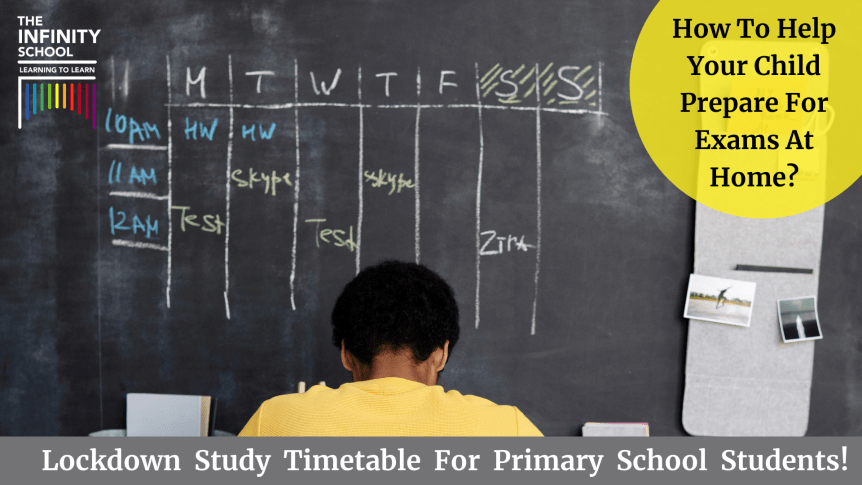
Annual exams are lurking just around the corner! Due to the COVID-19 pandemic, some CBSE schools in Noida Extension & Greater Noida will be conducting online exams for primary students while others are preferring offline methods and project-based assessments. This has led parents and teachers into exploring effective resources, tools, and study tips for primary school students at home, to make exam preparation easier, especially since it’s their first time on the online learning platform. In case you’re wondering how to help your child prepare for exams at home, take a look at our lockdown study timetable.
1) Pre-preparation for exams: Setting goals & study space
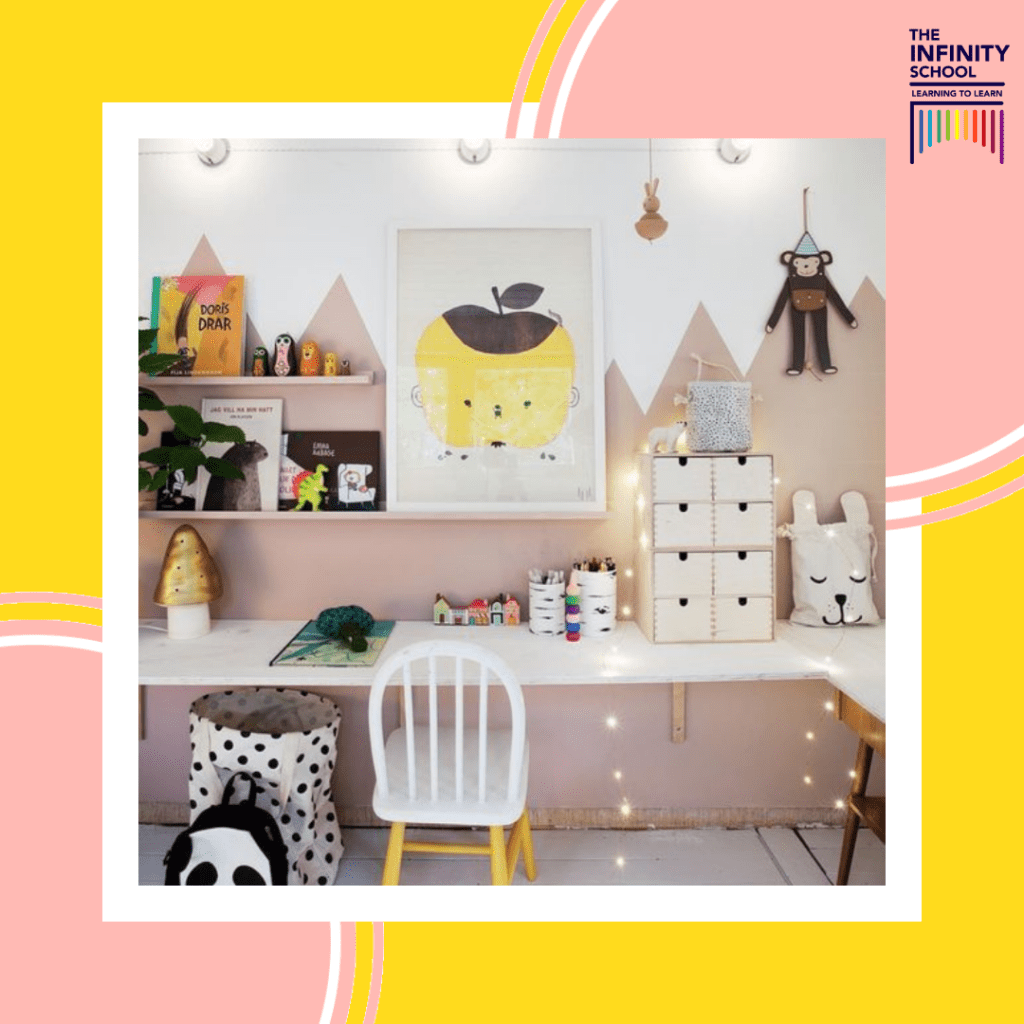
- Help your child select a quiet study space where they can arrange a proper desk & chair for their learning activities. The spot chosen should have easy access to all their study resources, with minimal distractions. Avoid having television, mobile phones, video games, or any kind of playing and eating activity around their study space. It helps them focus better.
- Knowing when, what, and how to study for exams saves kids a lot of time in making decisions and arranging study materials. Many blogs and guides covering study tips for exams encourage children to focus on ‘difficult’ subjects like math, science & history. However, we should understand that none of the subjects are too ‘easy’ or ‘difficult’. Each child has their own strengths & weaknesses, favourite & least favourite topics. Analyse kids’ interests and review past performances to discover subjects that need more attention. Help them create a personalised lockdown study timetable that allocates adequate time to all subjects, recreation & family activities. Remember to balance both offline and online activities.
2) Lockdown study timetable: Create a topic-wise checklist to plan ahead
Did you know? The average attention span of kids (<10 years) is not more than 30 minutes at a stretch. Beyond that, kids start losing interest and get distracted.
- Their lockdown study timetable should focus on specific topics & concepts (not subjects). Avoid generalisations like, “I will study math for an hour today and history for an hour tomorrow.” Rather, it should be “I’ll practice 5 math sums within 25 minutes today and memorise 4 historical events in an hour tomorrow.“
- Kids could start by reading lesson summaries & notes taken during classes before reading an entire chapter. The key is to get the gist of a topic first, then to move from pointers to comprehensive text, from easier to more complex topics. Kids develop confidence and are more likely to retain interest in self-study when they start accomplishing more and more goals on their exam preparation checklist. In case kids don’t have notes ready, you can help them make flow charts, tables & diagrams to summarise lessons as they read ahead.
- Visual aids make exam preparation more fun and time-savvy. Animations & reference videos can provide good revision material to help primary school students prepare for exams. Although, parents need to supervise the content being watched online. Since most of the children are already taking online classes, we should ensure that they spend not more than 1hr/day in unstructured activities, on the online learning platforms.
- We should help kids balance their structured learning time with unstructured learning activities, like scrabble, spelling bees, number lines, word puzzles, etc. This way, it’s easier for little ones to memorise what they’ve recently learned.
3) Revision tricks: How to practice to perfection
- The key to effective revision is moving from recently learned topics to older topics, and vice versa. It is recommended to revise on a weekly basis or once in 3 days rather revising all topics together!
- Help your child prepare for exams by making the revision process fun & engaging. As rhymes & songs already are a part of the child’s learning since early years, putting tables, formulae, and important dates into songs or rhythms makes revision hassle-free. Another fun way to revise is recording lessons as audio or video files and playing them later. Kinaesthetic learners take a quick glimpse of flashcards & charts to go through major points.
- You can also create quizzes and trivia to review your child’s progress. Post-revisions, children can create post-it notes with formulae and keywords to remember the points they tend to forget easily.
- Lastly, one of the most tested and tried exam tips is explaining the concept learned. Encourage kids to have informative discussions with their peers or have them explain a concept to you. This gives us an insight into how much they’ve retained
4) Mock test preparation: Honing important exam skills
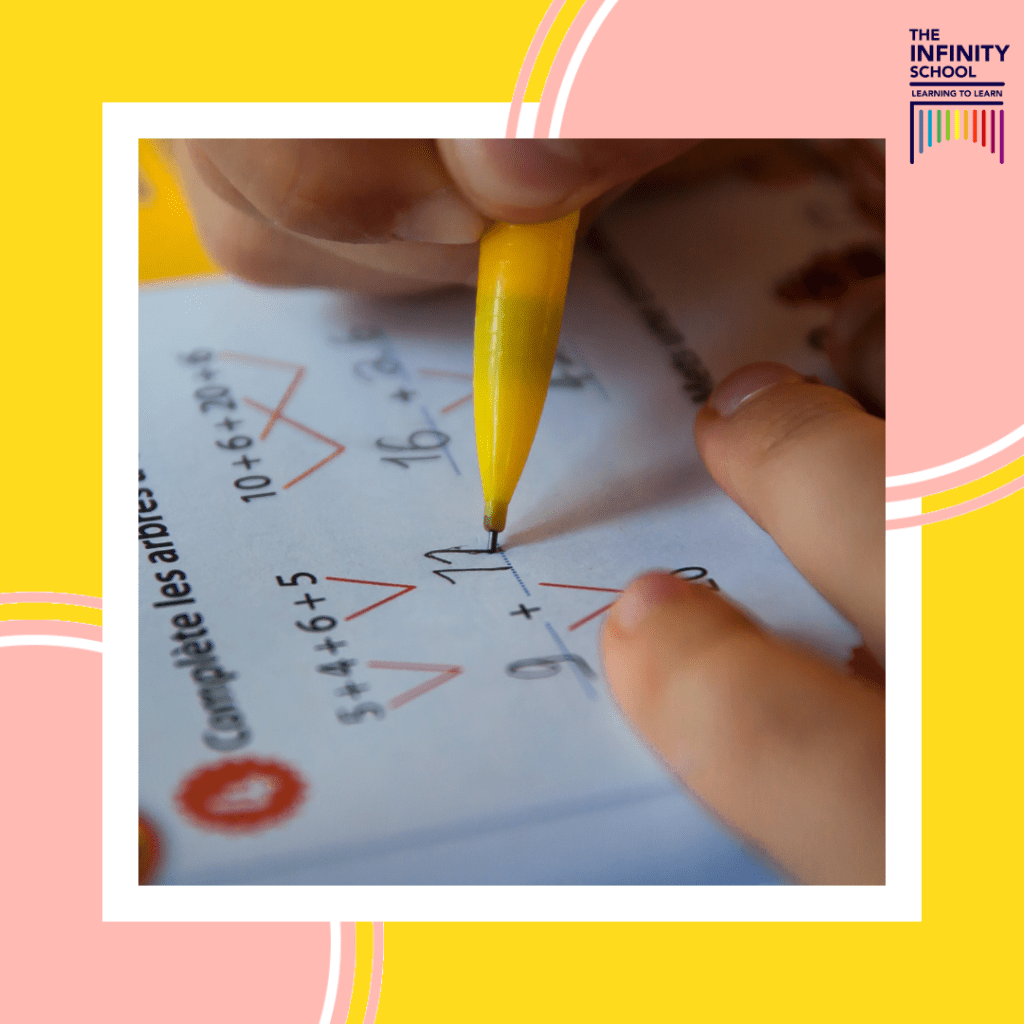
Solving practice papers or mock tests is a crucial part of the exam preparation routine. It familiarises students with the exam layout and helps them manage their time and writing/answering speed.
- Make sure that children solve at least one mock test paper after finishing each chapter.
- Students should read the questions and instructions very carefully before writing answers. Before answering, they should visualise the answers and the words/points they plan to use. A good trick is to answer the easy questions first (or questions carrying the lowest marks) before answering the difficult ones (or long-answer questions).
- Feedback helps students in improving further. While checking the child’s answers, we should highlight their strengths and weaknesses, and give tips to help them improve in areas that require attention. We should also remind them to review their answers properly to reduce the risks of making silly mistakes, spelling errors or leaving questions unanswered.
- Introducing time-bound tests, viva & quizzes, helps kids with time management. This helps improve writing strategies and speed.
5) Dealing with last-moment anxiety
Help your child prepare for exams by showing them how to cope with exam stress and anxiety. It’s important that they take breaks every once in a while, and unwind. Treat them to a snack, a game, or a movie when they’ve successfully accomplished the goals set for the day. A good night’s sleep and healthy meals are also important to keep them stress-free. Make sure that you talk to them about their fears and confusions, or encourage them to seek advice from teachers, in case of doubts. Use positive words and compliments to boost their morals. It keeps them motivated to keep trying further.
With these exam preparation tips, your child can easily ace the race!
 THE INFINITY SCHOOL