

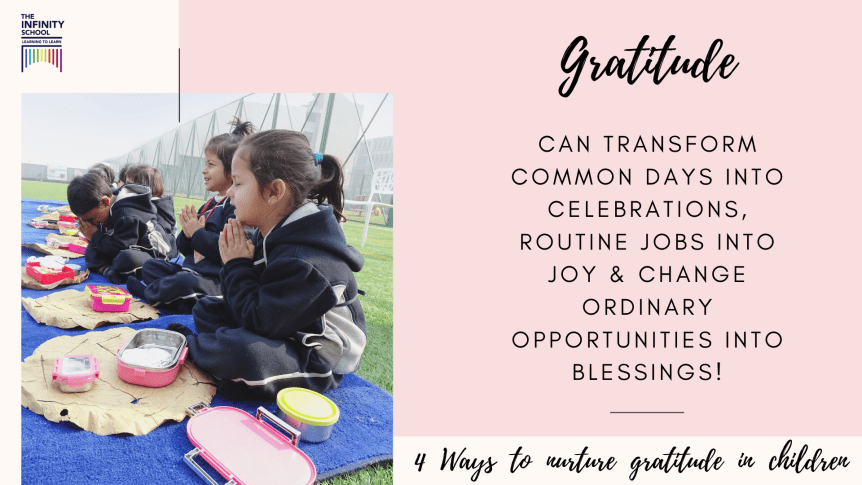
We thank people when they give us a gift or do us a favor and expect our little ones to do the same. But, is saying ‘thank you’ the same us expressing gratitude?
Psychologists believe that gratitude isn’t an action, but a strong positive emotion that comes from within. It’s being thankful and showing the willingness to appreciate and return the blessings bestowed upon us. Positive psychology says when people start recognizing the good in life, they’re hardly deterred by the bad & are more willing to return the kindness.
Author Melody Beattie once wrote—”Gratitude unlocks the fullness of life. It turns what we have into enough, and more. It turns denial into acceptance, chaos to order, confusion to clarity, a meal into a feast, a house into a home, a stranger into a friend.”
So how do we nurture gratitude in children? By understanding the key components of gratitude, followed by positive modeling & regular practice.
Helping Kids Express Gratitude By Understanding The Key Components:
- Affirmation
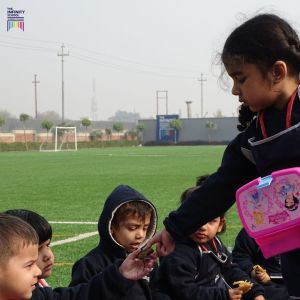
Acknowledging the good things in life make it worth living. Asking children to share three things they appreciate about their day is one way of nurturing gratitude. Curious questioning is another. (“Didn’t you feel good that your friend shared his lunch with you?”) When kids acknowledge that something good has happened to them, they feel grateful, both for the presence of good things, and the efforts of the giver. Positive psychology says when people start recognizing the good in life, they’re hardly deterred by the bad & are more willing to return the kindness.
2.Appreciation
At times, children may not know how to show their appreciation. We can help them by modeling positive behavior (e.g., thanking our child for helping us with domestic chores or appreciating them whenever they independently clean their rooms). Appreciation is a more effective motivator than praise or repetition, which inspires people to act positively. When kids see us appreciating and respecting others, especially themselves for little things, they’re intrinsically inspired to repeat the gesture.
3.Support
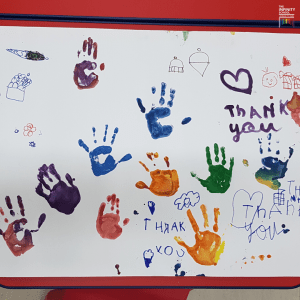
Supporting our child’s autonomy is an important part of nurturing gratitude. Rather than telling kids to thank people often, we should perhaps let them decide how they want to express gratitude. If the child is good at drawing or writing poetry, encouraging them to make a ‘thank you’ card or write down a meaningful poem is probably a better way. Don’t you think so? It gives them the satisfaction that they’ve put in efforts by themselves.
4.Upholding Positive Family Traditions
Positive family traditions create opportunities for children to practise gratitude in daily life. E.g., periodically volunteering for a social cause, raising funds to sponsor someone’s education, or helping the neighbours clean their yard, etc.
However, while modelling gratitude, we must also tell children why we’re doing it (“We’re donating money to provide shelter to homeless animals.”), while keeping the explanations simple so that kids understand its relevance & accept generosity, care & empathy as parts of family culture.
It has now been scientifically proven! According to UCLA research, expressing gratitude makes children more content, happier & healthier by improving their relationships and altering the grey matter of the brain to boost productivity & emotional health.
Gratitude expert David Steindl-Rast associates qualities like recognition (appreciating the value) & gratis (giving out freely) with gratitude. Likewise, Dr. Robert Emmons believes gratitude is about affirming the good things in life and acknowledging the source of our blessings.
We’ve to help kids understand that intangible sources (like good health, favour from a friend, fun moments spent with family, etc.) can make us as happy as material gifts, and we should be thankful for the same. Making children aware of simple things that make us happy builds a gratitude mindset for life and strengthens their emotional connection with others.
Expressing gratitude, noticing good around them & appreciating life are certain skills that kids can work on forever. The more they practice, the better they become. Eventually, they’ll grow up into joyful, optimistic & content adults who live a happy life. Learn about other core values that children should grow up with, to develop into wonderful thought leaders.
 THE INFINITY SCHOOL